Southside Speedway
 Flag of USA


Circuit Overview
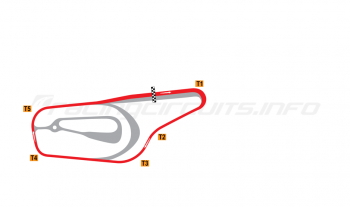
Southside Speedway stands as one of America's most storied short tracks, earning its fearsome reputation as "The Toughest Short Track in the South" through seven decades of wheel-to-wheel combat. The 0.333-mile (0.536-kilometre) asphalt oval has witnessed NASCAR legends cut their teeth, local dynasties forge racing empires, and most recently, a community unite to resurrect their beloved Friday night tradition from the brink of permanent closure.
Located in Chesterfield County, Virginia, just south of Richmond, this unforgiving circuit has challenged drivers with its minimal banking and tight racing surface since 1959. After closing during the COVID-19 pandemic in 2020, the circuit’s rustic charm and fiercely loyal fan base have inspired plans for revival under new operators.
Circuit History
The story begins in 1948 when Nelson Royall and Bob Streeter constructed a new racing facility, after noise complaints that had forced rival promoters to cease using Richmond's City Stadium. They leased 30 acres off Genito Road and opened Royall Speedway in April 1948 as a 0.200 mi / 0.322 km paved oval, drawing 3, 000 spectators to the inaugural headliner featuring Len Duncan and Bill Schindler.
After two seasons, promoters converted the surface to dirt and slightly widened corners to suit stock-car aspirations. While some period accounts claim the reconfigured track measured 0.205 mi / 0.330 km, sanctioning documents retained the original one-fifth-mile (0.322 km) length. Royall Speedway hosted four NASCAR Short Track Division races between 1951 and 1954, before financial strains and competition forced closure at the end of 1955.
Revival under John M. Wilkinson
In late 1957 developer John M. Wilkinson acquired the dormant site, initially planning a housing subdivision called "Apple Orchards", but was then persuaded to reinstate the circuit by local racers. After buying out his partners and securing NASCAR sanction, Wilkinson reopened the facility on 15 April 1959 as Southside Speedway, with Modified racing as the featured division. The first event offered a US$1,650 winner’s purse and drew 1,500 fans, despite pouring rain.
Attendance climbed steadily, and by mid‑1960 track announcer Jack Hampton reported fields of 40 cars vying in 200‑lap features. Wilkinson’s wife Anna became co-owner in March 1960, cementing family stewardship that would last six decades. Rising star Bobby Allison scored his first major short-track win in a 400‑lap main, later recalling, “I drove hard right from the green flag and earned every ounce of respect from that crowd.”
NASCAR establishes racing credibility
Southside Speedway's most prestigious chapter unfolded during NASCAR's formative Grand National era. The track hosted its first NASCAR Cup Series race on 18 August 1961, when the facility still operated as a quarter-mile dirt oval. Junior Johnson delivered a masterclass performance, qualifying on pole at 58.86 mph in his 1960 Pontiac and leading every lap of the 150-lap feature in approximately 45 minutes.
The track underwent dramatic transformation for 1962, converting from dirt to asphalt whilst extending the layout to its current one-third-mile configuration. This modernisation immediately elevated competition levels, with Rex White capturing pole position at 71.45 mph, though mechanical troubles on lap 134 handed victory to Jimmy Pardue in his 1962 Pontiac. Richard Petty finished third in this memorable contest, adding his legendary name to Southside's racing registry.
The final NASCAR Cup Series event occurred on 19 May 1963, with Ned Jarrett dominating the 300-lap feature in his 1963 Ford after leading the majority of the race. Though NASCAR's premier series departed after 1963, these three years established Southside's reputation as a proving ground for America's finest stock car drivers.
Racing dynasties and the hendrick legend
The 1970s witnessed the emergence of three legendary racing families that would define Southside Speedway's golden era. Ray Hendrick established the most enduring dynasty with his burgundy Modified number 11, featuring the iconic "Flying Eleven" logo that became synonymous with Virginia short track excellence.
Hendrick's dominance extended far beyond Southside, earning 20 victories at Martinsville Speedway between 1963-1975 and achieving eighth and ninth place finishes in National Late Model Sportsman points during 1974-1975. His philosophy of "racing anywhere and everywhere" epitomised the era's competitive spirit until his death from cancer on 28 September 1990.
The Hendrick legacy continued through "Rapid" Roy Hendrick, who maintained the family's burgundy number 11 paint scheme whilst engaging in fierce 1980s battles with Wayne Patterson.Currently, Brandon Hendrick represents the third generation, competing in Late Model Sportsman and Modified divisions under number 55.
The Johnson and Hairfield families completed this triumvirate of racing royalty, with Cal Johnson's descendants including Eddie Johnson (1980s champion-level competitor) and Chris Johnson (winner of the 2008 Modified season opener). The Hairfield clan produced "Bugs" Hairfield and grandson Chris Hairfield, maintaining their family's competitive tradition across multiple decades.
Breaking barriers and launching careers
Southside Speedway's significance extends beyond entertainment into civil rights history through Wendell Scott, NASCAR's pioneering African-American driver. Scott captured the 1959 Sportsman Division championship at Southside whilst simultaneously winning the NASCAR Virginia State Sportsman Championship,marking crucial early victories in his groundbreaking career that culminated with NASCAR Hall of Fame induction in 2015.
The track's most famous graduate, Denny Hamlin, began his journey in the Mini Stock division during 1997 before ascending through regional competition to NASCAR's premier level.Hamlin's success inspired the Denny Hamlin Short Track Showdown (2008-2010), featuring NASCAR Cup Series stars competing against regional Late Model drivers in charity events supporting cystic fibrosis research.
These spectacular showdowns put Southside in the national spotlight, with Kyle Busch, Tony Stewart, and Joey Logano among the Cup Series luminaries who battled local heroes.The most memorable edition saw regional driver C.E. Falk defeat NASCAR royalty in 2010, passing Hamlin on the final lap and holding off Stewart's charge to claim an unlikely victory.
Survival through adversity
Throughout its history, Southside Speedway faced numerous existential threats that tested the Wilkinson family's resolve. The track survived serious safety concerns in 1983 when Chesterfield County condemned the facility due to hazardous wooden grandstands, prompting expensive upgrades to meet modern standards.
The late 1980s brought perhaps the greatest challenge when developers targeted the property for a shopping mall, threatening to permanently erase decades of racing history. The family's commitment to motorsport prevailed, with new aluminium grandstands installed that doubled seating capacity whilst improving spectator safety and comfort.
Financial pressures intensified during the 2000s as attendance declined and operational costs mounted. Track owner Sue Clements (daughter of John Wilkinson) initially cancelled the entire 2011 season due to health problems, though a shortened 11-week schedule was ultimately salvaged featuring returning Legends and Pro Six divisions.
The final checkered flag and closure
The COVID-19 pandemic delivered the knockout blow that 70 years of challenges could not achieve. After completing their 60th anniversary season in 2019, the Wilkinson family was forced to cancel the entire 2020 schedule just days before opening night due to health restrictions.
The financial devastation proved insurmountable for the family operation. On 11 December 2020, Southside Speedway announced permanent closure with a heartfelt statement: "When Covid began to affect us here in Central Virginia, we were just days away from beginning our 2020 season. With cautious optimism we held off cancelling our season... That was not to be, and for the first time in over 60 years, there was no racing to be had."
The announcement marked the end of an era, concluding six decades of continuous family ownership and operation that had entertained countless generations of Central Virginia racing enthusiasts.
County intervention and preservation efforts
Recognition of Southside Speedway's cultural significance prompted swift action from local government and grassroots activists. Former driver Lin O'Neill launched the "Save Southside Speedway" campaign,collecting over 21,000 signatures on petitions supporting the track's revival whilst lobbying Chesterfield County officials for intervention.
In June 2021, the Chesterfield County Economic Development Authority purchased the 47-acre property for approximately £3.6 million ($4.5 million), preventing incompatible redevelopment whilst preserving racing's potential return.Board Chairman Jim Ingle and Matoaca District Supervisor Kevin Carroll championed the acquisition,recognising the facility's importance to the nearby River City Sportsplex sports tourism corridor.
The county's strategic approach maintained public ownership whilst seeking qualified operators capable of restoring racing operations. Multiple development proposals were considered during 2021-2024, with various options ranging from complete redevelopment to racing restoration being evaluated.
Competitive Racing Investments secures the future
After extensive negotiations, Chesterfield County finalised a groundbreaking 20-year lease-to-purchase agreement with Competitive Racing Investments (CRI) on 11 March 2025.The $5.9 million deal provides CRI with immediate operational control whilst establishing a pathway to eventual ownership.
CRI's leadership combines racing expertise with business acumen through Lin O'Neill (President of Racetrack Operations) and Jeff Oakley (Manager and Chairman). Remarkably, these former rivals from their Southside racing careers united as business partners to preserve their beloved track's legacy.
The agreement's innovative structure charges £720 ($1) annual rent for the first five years, followed by £26,560 ($32,833) monthly payments from year six onwards.CRI must reopen racing operations within five years or face lease termination, ensuring accountability whilst providing sufficient time for comprehensive facility renovation.
Modernisation plans and racing renaissance
CRI's ambitious vision extends far beyond simple racing restoration, targeting transformation into a year-round entertainment destination. Plans include complete track surface renovation, grandstand expansion from 6,000 to 15,000 capacity, LED lighting installation throughout the facility,and comprehensive infrastructure upgrades including modern amenities and enhanced safety systems.
Racing operations will honour Southside's traditional Friday night schedule whilst expanding offerings to include multiple weekly events, touring series competitions, and special attractions. SMART Modified Tour and zMAX CARS Tour have expressed interest in scheduling events, whilst NASCAR sanctioning is being pursued with assistance from neighbouring Langley Speedway.
The facility's 47-acre footprint enables ambitious expansion beyond racing, with plans for concerts, festivals, drive-in movies, car shows, and corporate events creating a comprehensive entertainment complex that complements the adjacent River City Sportsplex sports tourism hub
CRI spokesperson David Palmer stated, “We plan to reopen Southside Speedway by summer 2026 with modern safety upgrades while honouring its legacy.”
Local racing community leaders have formed a “Friends of Southside” committee to assist on heritage displays and volunteer marshals, ensuring that, once green‑flag waves again, Southside’s spirit will remain intact.
Jump onboard
Circuit info
- Southside Speedway, 12800 Genito Road, Chesterfield County, Virginia, USA
Rate This Circuit
Votes: 923
Plan a visit
Planning a visit to Southside Speedway? Find the best deals near to the circuit on hotels, apartments and rooms to rent from the map below.
Tip: You can also find the best local restaurants and deals on other nearby attractions by clicking on the logo in the top left of the map.
Southside Speedway is currently a dormant venue, closed since December 2020, though scheduled for reopening by 2026.
The track occupies a prime spot along Virginia Route 288 in Chesterfield County’s Genito/288 corridor, adjacent to the River City Sportsplex. It lies seven miles west of Interstate 95, 17 miles from Richmond International Airport and seven miles from Richmond Executive–Chesterfield County Airport. Excellent road access and proximity to sports‑tourism amenities position Southside for a robust renaissance upon reopening.
Get directions
Current Conditions
21°C
Clear sky
Feels Like: 22°C
Humidity: 84%
Wind: Light air, 1.54 m/s
Direction: Towards S

0%
Five Day Forecast
Wed
Oct 14
Clear sky
31°C / 19°C
0%
Thu
Oct 15
Clear sky
25°C / 20°C
0%
Fri
Oct 16
Overcast clouds
29°C / 19°C
0%
Sat
Oct 17
Light rain
24°C / 12°C
65%
Sun
Oct 18
Clear sky
16°C / 6°C
0%