Miami International Autodrome
 Flag of USA


Circuit Overview
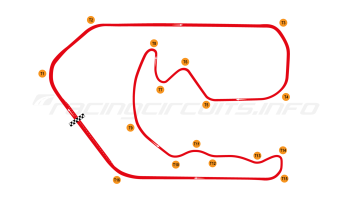
Built around Hard Rock Stadium on the edge of Miami Gardens, the Miami International Autodrome is a modern, closed-campus circuit created to give Formula One World Championship a long-term home in South Florida from 2022. The lap threads between perimeter roads and purpose-built sections laid across the stadium’s parking areas, with the venue’s main bowl and grandstand clusters forming a constant visual reference as the track loops back to the pit complex on the north side of the stadium.
In character it sits somewhere between street course and permanent facility: wide open spaces allow for long acceleration zones and sweeping corners, but the racing line is boxed in by walls and event infrastructure. The official Grand Prix configuration measures 5.412 km (3.363 miles), has 19 corners and is run anti-clockwise, with three DRS zones and peak speeds quoted at over 350 km/h.
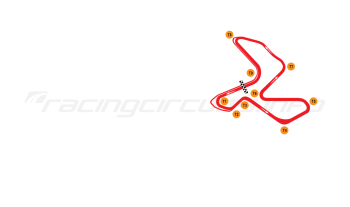
From 2026, the Autodrome added a second FIA world championship to its CV. The FIA Formula E World Championship uses a dedicated 2.32 km (1.44-mile), 14-turn layout on the same campus, a tighter configuration designed around heavy braking and energy management rather than outright top speed.

Circuit History
Miami has been here before. The city’s modern motorsport story has repeatedly flirted with temporary circuits, from the 1980s onwards when Ralph Sanchez helped bring major sportscar and open-wheel racing to downtown streets. Over time, purpose-built venues in the wider area offered a simpler base for major events, not least Homestead-Miami Speedway in Miami-Dade County. Even so, the idea of a headline race “in Miami” never completely went away.
Talk of a Formula 1 race circulated periodically in the Bernie Ecclestone era, with rumours of a waterfront blast, but nothing concrete emerged. The city did get a taste of the modern electric era in 2015 when Formula E staged a one-off race on a short downtown course around the then-AmericanAirlines Arena, but it would take a different set of circumstances for a long-term top-tier venue to finally stick.
Downtown proposals and the Bayfront backlash
The serious push for an F1 race gathered momentum after Liberty Media took control of the sport and prioritised growth in the United States. Early concepts focused on downtown, with Apex Circuit Design supporting feasibility and design work on proposed routes around the city and port.
One prominent concept placed the circuit in and around Bayfront Park, sending cars along the waterfront and over the Port Boulevard bridge to Dodge Island before returning to the finish. The reaction, however, was bruising. Lewis Hamilton publicly questioned the appeal of the layout and local groups including the Biscayne Neighborhoods Association raised objections about consultation and disruption. As political resistance hardened, the downtown plan became increasingly difficult to progress.
The stadium solution
The breakthrough came when attention shifted north to the stadium campus. Stephen Ross – a billionaire real estate developer and philanthropist, founder and non-executive chairman of Related Companies and chairman and managing general partner of Miami Dolphins and Hard Rock Stadium – was one of the prime movers behind the project. As chairman and managing partner of the Dolphins’ wider sports and venue operation, Ross could offer Formula 1 something it could not get downtown: a single, securable campus with space to build a modern Grand Prix ‘circuit site’ around an existing landmark venue.
Even here, the route to the start line was not smooth. Just as with the Bayfront Park proposals, the plans soon found themselves mired in legal challenge, with Miami-Gardens residents going on to sue the Miami-Dade County and Mayor Carlos Giminez for racial discrimination. This didn’t help the prospects of the circuit being included on the F1 calendar, with 2020’s schedule coming and going without the inclusion of the Miami Grand Prix. The Coronavirus pandemic only served to complicate matters further.
Meeting the concerns of the local residents was clearly going to be key to resolving the impasse, so a revised layout was announced which cut out the section along 199th Street, in favour of a slightly meandering section running alongside it through the parking lot.
Then, a compromise deal was worked out between Ross and Mayor Rodney Harris, which would see the city receive USD $5 million in funding over 10 years for residents and businesses. Also funded would be a STEM programme to offer paid internships for high school and college students, while the circuit would also feature noise mitigation barriers and air quality monitoring throughout the event.
Finally, the deal is done
In April 2021, the Miami-Gardens Commissioners voted to approve the deal and the Miami Grand Prix was formally announced, with a date to be slotted in during the second quarter of the 2022 schedule.
By May 2022, the Miami International Autodrome was ready for its first Grand Prix, immediately standing out for its stadium-centred setting and hybrid feel: part street-track intensity, part purpose-built event campus. The inaugural race also delivered an early “Miami template”, with long-run pace and clean overtaking mattering as much as qualifying. Max Verstappen took the first win after passing Charles Leclerc for the lead and then holding him off after a late safety car, with Carlos Sainz Jr. completing the podium.
A year later the circuit underlined its strategic unpredictability. In 2023, Verstappen recovered from ninth on the grid to win, overhauling team mate Sergio Pérez as tyre life and traffic reshuffled the order. It was a neat demonstration that Miami’s long straights and heavy braking zones can reward cars that look after their tyres and drivers who can attack decisively in dirty air.
The event took another step in 2024 when Miami hosted a Sprint-format weekend. Amid the added sessions and compressed practice time, the Grand Prix produced a breakthrough moment: Lando Norris scored his maiden Formula 1 victory, using a well-timed stop under the safety car to seize track position and then controlling the closing stages ahead of Verstappen.
Inner loops give year-round running
For its first three seasons, the Autodrome largely existed as an F1-weekend-only proposition, because the full Grand Prix circuit crossed roads and movements that made “everyday” operation difficult. That changed when South Florida Motorsports introduced four additional “inner loop” configurations designed specifically to keep all running on private property, allowing the circuit to operate year-round without the external road closures required by the Grand Prix layout.
These new options gave the venue a proper multi-layout identity, with variants branded around the “Marina” and “MIA” loops, and created a platform for major non-F1 race meetings as well as private and corporate running.
“Our investment into the facility and construction of the inner loop creates five track configurations worthy of the world’s most elite drivers and allows us to engage with the growing motorsports community of South Florida while also respecting the impact to local residents and businesses," explained Miami Grand Prix managing partner Tom Garfinkel. “There’s a thriving car culture here in South Florida and this investment enables us to better serve this growing group of automotive enthusiasts, as well as utilising our campus for more community programming, including education and career opportunities for local youth and students.”
The first headline beneficiary was Ferrari Challenge North America, which brought its Ferrari Racing Days programme to Miami in May 2025. The meeting marked the series’ debut at the Autodrome and ran on the Extended Marina Loop, explicitly highlighted as the venue’s largest new configuration.
Two months earlier, the circuit had hosted Formula E’s celebrity-led Evo Sessions (5–6 March 2025), using the Extended MIA Loop variant. This saw big names like Brooklyn Beckham, Tom Felton and Sergio Agüero all given the chance to be tutored by Formula E drivers to try and set the best lap times around the course.
Formula E adds second intermational event
With those proving runs complete, the FIA Formula E World Championship formally arrived at the Autodrome for the Miami ePrix on 31 January 2026, using the MIA Loop configuration – a compact 2.32 km, 14-turn lap tailored to Formula E’s energy and braking demands.
The inaugural Formula E race at the venue delivered an instant talking point: Mitch Evans took victory for Jaguar TCS Racing, giving the Autodrome a second top-tier international winner to sit alongside its now-established Formula 1 fixture.
Jump onboard
Circuit info
- Miami International Autodrome, 347 Don Shula Drive, Miami Gardens, Florida 33056, USA
- +1 305-943-7223
- Email the circuit
- Official website
Rate This Circuit
Votes: 4036
Plan a visit
Planning a visit to Miami International Autodrome? Find the best deals near to the circuit on hotels, apartments and rooms to rent from the map or click the buttons below for the best deals on flights and car hire.
The Miami International Autodrome is located in Miami-Gardens in Florida, USA. The nearest airport is Miami International, located around 20 minutes' drive south of the circuit.
There will be no day-of parking purchases available during the Grand Prix. Fans must already have a parking pass in order to park on race weekend, with passes available via the official race website.
Find cheap flights Book affordable car hireGet directions
Current Conditions
24°C
Overcast clouds
Feels Like: 24°C
Humidity: 69%
Wind: Light air, 3.6 m/s
Direction: Towards NE

0%
Five Day Forecast
Sat
Oct 24
Scattered clouds
28°C / 21°C
17%
Sun
Oct 25
Clear sky
27°C / 19°C
0%
Mon
Oct 26
Light rain
25°C / 21°C
97%
Tue
Oct 27
Moderate rain
26°C / 22°C
100%
Wed
Oct 28
Light rain
23°C / 23°C
70%