Zweibrücken
 Flag of Germany


Circuit Overview
The Zweibrücken Racing Circuit stands as one of Germany's most distinctive motorsport venues, uniquely combining racing with active aviation operations. Built on the runways and taxiways of Zweibrücken Airport in Rhineland-Palatinate, it is the world's only active airport racing circuit where events literally stop for aircraft takeoffs and landings.
The circuit gained prominence in the 1990s by hosting the nation's then-premier touring car championship, the Super Tourenwagen Cup (STW), from 1996 to 1999. However, the costs of the temporary circuit meant it did not survive into the DTM era.
After a 20-year hiatus, however, the track experienced a major renaissance in 2020 with the launch of the annual "Historisches Flugplatzrennen" (Historic Airfield Racing) and Mythos Sportscar events, bringing back racing to the runways.

Circuit History
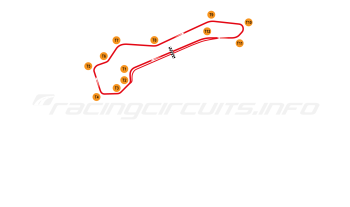
Zweibrücken Airport's motorsport story began in 1996 when its infrastructure was first configured into a temporary racing circuit. The temporary nature of the circuit required complete setup and breakdown for each event, with professional racing infrastructure installed on the airport's northern section, featuring long runway straights and artificial chicanes created with taxiways.
Located 7 kilometers east of the city centre, the venue immediately attracted Germany's top-tier racing, hosting rounds 11 and 12 of the Super Tourenwagen Cup (STW) in its inaugural season. This era, from 1996 to 1999, coincided with the peak of German Super Touring Car racing, establishing Zweibrücken as a significant national venue. The circuit also hosted other major national championships, including the German Formula 3 Championship and the VW Beetle Cup.
The track became a proving ground for top European touring car talent. Legendary Italian driver Emanuele Pirro, who later won Le Mans five times, took the pole position at the first event, but was pipped to victory in each race by Peugeot driver Laurent Aïello. Pirro would take one of the race wins the following year, Aïello the other. Other STW winners included Johnny Cecotto in 1998 and Christian Abt in 1999, in both cases as part of successful championship challenges.
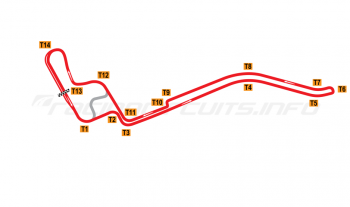
On two wheels, the track also hosted events, with the International Pro-Superbike class hosting its season-opening event in 1997 on an extended 4.350 km version of the course, which ran clockwise and utilised the whole runway (peppered with two chicanes), before heading up a gentle hill past the control tower and back to the start finish via the airport taxi-ways. Spanish racer Gregoria Lavilla won both races for Ducati.
The following year, the Superbikes reverted to essentially the same course as used by the STW Cup. Swedish Yamaha rider Christer Lindholm was victorious in very wet conditions, though German rider Jochen Schmid took the spoils in the second race, which started with a damp track but was red-flagged for good after 10 laps when heavy rains returned.
Financial constraints led to the end of national championship hosting after 1999 and contributed to the broader collapse of the STW series. The circuit then entered a long dormant period from 2000 to 2019, coinciding with the airport's transition from military to civilian use and the cessation of commercial operations in 2014.
Racing comes back to the runways
In 2020 Zweibrücken experienced a remarkable motorsport revival, with the launch of two new events celebrating speed and racing machinery. First came Mythos Sportwagen (18–20 September), a track-day-cum-sprint meeting curated by Wolfgang Fousek that let Lotus, Group C and NASCAR machinery loose on a five-kilometre course that was similar to that used by the Pro-Superbikes in 1997. One week later Wolfgang Heinz’s Historisches Flugplatzrennen debuted on 26–27 September, the chill forcing organisers to ladle hot Glühwein for shivering spectators.
Despite pandemic restrictions, more than 150 entries from five countries turned out, proving the model viable. The Flugplatzrennen adopted a 2.000 km loop and partnered with the GLPpro regularity championship, featuring vintage Formula cars, classic motorcycles and historic touring cars. The revival has created new traditions, such as the Friday evening "Oldtimer-Korso," a public parade of racing vehicles from the airport through the city centre to Schlossplatz (Castle Square). Another regular occurrence has been the participation of Walter Knoll, an over-80-year-old local resident who raced his Adler MB 250RS motorbike in each Historisches Flugplatzrennen.
In 2024 Mythos Sportswagen evolved into Air & Speed, melding aviation displays with motrosport sprint runs. Helicopter joy-flights buzz above the live track while pit crews barbecue Bratwurst on disused Lycoming engine blocks, a nod to the venue’s aeronautical DNA. The venue continues to operate with unique mixed-use scheduling, where general aviation flight slots are designated between racing sessions, making it the world's only active airport racing circuit.
Today’s historic racing events preserve the airfield’s motorsport legacy, while demonstrating the viability of temporary racing venues. The circuit’s success in transitioning from professional racing to amateur events which attract crowds of up to 10,000 spectators, make it a singular case study in adaptive facility use. Its unique combination of aviation operations and racing activities, ensures its continued importance to the German motorsport scene for years to come.
Jump onboard
Circuit info
- Berliner Allee 11 - 21, 66497 Zweibrücken, Germany
Rate This Circuit
Votes: 851
Plan a visit
Planning a visit to Zweibrücken? Find the best deals near to the circuit on hotels, apartments and rooms to rent from the map or click the buttons below for the best deals on flights and car hire.
Zweibrücken Airport is situated in Rhineland-Palatinate, Germany, approximately 29 km west of Saarbrücken.
The circuit is easily accessible by road via the Autobahn A8, taking the Contwig/Flughafen/Bitche exit. Public transport is available using Bus route 226, which connects the airport to Zweibrücken city centre and the main train station.
The nearest major airport for international travellers is Saarbrücken Airport (SCN), located 21 km away. The venue is 13 km from the regional centre of Homburg. Visitors should note the circuit's unique operational status: general aviation continues, meaning racing sessions are scheduled around designated flight slots.
Get directions
Current Conditions
10°C
Clear sky
Feels Like: 10°C
Humidity: 97%
Wind: Light air, 1.53 m/s
Direction: Towards SE

0%
Five Day Forecast
Fri
Oct 16
Clear sky
22°C / 9°C
0%
Sat
Oct 17
Few clouds
13°C / 7°C
0%
Sun
Oct 18
Few clouds
9°C / 6°C
0%
Mon
Oct 19
Moderate rain
13°C / 8°C
100%
Tue
Oct 20
Broken clouds
14°C / 7°C
0%