Helsinki Thunder
 Flag of Finland


Circuit Overview
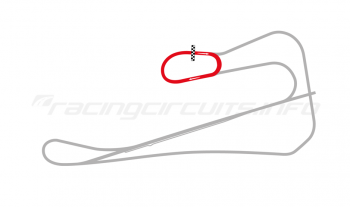
For three brief summers in the mid-1990s Helsinki Thunder turned Finland’s seaside capital into a thundering amphitheatre, winding between the Hanasaari power station and the harbour quays, guarded by towering concrete walls and tight temporary chicanes.
DTM and ITC tin-tops provided the early headline acts before FIA GT and International Formula 3000 took the final bow. Big crowds in the early years and a soundtrack that echoed across the water created an atmosphere unmatched by any Scandinavian circuit of the era. Then, as quickly as it arrived, the roar fell silent.
Circuit History
Former Trans-Am racer Robert Lappalainen first sketched the idea of a Helsinki street race in 1994, determined to give Finland a showcase for circuit racing to rival its famed rally stages. City officials backed the vision and, in just a few hectic months, ordinary harbour roads in the Sörnäinen district were transformed with concrete blocks, debris fencing and makeshift pit facilities.
The inaugural event in June 1995 featured the flame-spitting Class 1 touring cars of the DTM. More than 110,000 spectators jammed hastily erected grandstands as Christian Danner and Nicola Larini split the race wins. Drivers raved about the under-flyover plunge and the bumpy sprint past Hanasaari’s coal hoppers, though several confessed that bravery trumped precision on the rough surface.
In 1996 the DTM morphed into the International Touring Car Championship and returned to Helsinki with fresh chicanes that trimmed the lap to 1.976 miles. Attendance swelled to an estimated 130,000 and Hans-Joachim Stuck’s Opel Calibra swept both races. International media hailed Helsinki Thunder as Europe’s answer to Surfers Paradise, yet behind the scenes the event’s shoestring logistics were starting to creak.
Team managers grumbled about cramped paddock tents, scarce power points and a paddock resembling a public promenade. While sponsors loved the carnival buzz, the cost of closing key commuter roads for a week tested civic patience and the track’s winter-ravaged asphalt demanded expensive annual repairs.
A star attraction loses its shine
With the ITC collapsing, Lappalainen repositioned 1997 around a one-off FIA GT round and an International Formula 3000 support. The date, inconveniently close to Le Mans, gutted the GT entry list, and a late switch to phone-only ticket sales left fans fuming after hour-long waits. Sparse grandstands told the tale: the thunder was fading fast.
Soheil Ayari won a crash-studded F3000 race punctuated by safety cars as single-seaters bounced over ripples meant for saloons. JJ Lehto salvaged Finnish pride by taking a home-soil GT victory alongside Steve Soper in the McLaren-BMW, yet teams slammed the event’s facilities as the worst they had seen. City engineers warned that a special smooth resurfacing would be needed for future editions, a bill no one volunteered to pay.
Plans for a 1998 World Touring Car World Challenge never progressed. Financial losses, local disruption and the looming resurfacing cost ended the dream. Today, only memories and grainy TV replays recall the weekend when world-class racing thundered through Helsinki’s docklands.
Circuit info
This is a historic circuit which is no longer in operation.
- Sörnäisten Rantatie 23, 00500 Helsinki, Finland
Rate This Circuit
Votes: 1176
Location Information
As the Helsinki Thunder circuit ceased operation in 1997, nothing of a racing venue remains on site today. The course was a collection of normal city streets, which have since been absorbed into modern Helsinki’s urban landscape. The old Sörnäinen harbour area – once home to the paddock and grandstands – has been completely redeveloped into the Kalasatama waterfront district, with new residential towers, a shopping mall and parks now dominating the skyline.
Today the once-bustling pit straight on Sörnäisten Rantatie is now a busy thoroughfare connecting the city centre to eastern suburbs. A visitor can still drive or walk the public roads that comprised the circuit (many follow their original alignments), but a keen eye and a fair bit of imagination are needed to trace the path of the track. The Hanasaari power plant, a backdrop to the racing action, still stands nearby (though it is in the process of decommissioning). Apart from that industrial relic, the “Thunder” has long since faded – the site today offers no motorsport, but you’ll find a vibrant urban neighbourhood where the roar of engines once echoed.