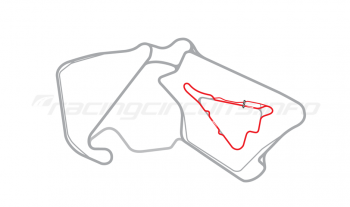
Phillip Island
 Flag of Australia


Circuit Overview
A circuit with a turbulent history, the Phillip Island Grand Prix Circuit has twice been closed and revived. An extensive rebuild brought it up to international standards for Australia's first world championship motorcycle Grand Prix in 1989, and its fast, sweeping lap has been a motorcycle racing favourite ever since.
The island's roads also staged the first Australian Grand Prix in 1928, and the circuit gave birth to the race that became the Bathurst 1000 and hosted touring-car championship rounds from 1976 to 2019.
The 2026 Australian Motorcycle Grand Prix, on October 23–25, is the final MotoGP round before the Australian race moves to Adelaide in 2027, and World Superbikes are due to leave in February 2027. Supercars is due to return every year from 2027 to 2031.

Circuit History
Motorsport has been synonymous with Phillip Island since 1928, when Captain Arthur Waite raced his Austin 7 to victory in what would later be recognised as the first Australian Grand Prix. Held on a 6.5-mile open-road course, the event became an annual fixture until 1935, while motorcycle racing continued on the island's unsealed public roads until 1940.
The construction of a permanent circuit in the 1950s established Phillip Island as one of Australia's most important motorsport venues, although its history has been punctuated by financial difficulties, deteriorating track surfaces and periods of closure. Since its revival in the late 1980s, the spectacular coastal circuit has become internationally renowned for motorcycle racing, hosting some of the most memorable battles in Grand Prix and World Superbike history.
Racing on the island's roads
Although racing on public roads was prohibited in Victoria, Phillip Island had recently established its own shire council, which supported a proposal by the Light Car Club of Victoria to organise a race. The resulting 100 Miles Road Race was contested over 16 laps of a roughly rectangular 6.569-mile (10.572 km) course, with separate races for different classes.
Originally scheduled for March 26, 1928, the event was postponed by rain until March 31. Seventeen cars started, with Waite's supercharged Austin 7 taking victory in 1 hour 46 minutes 40 seconds, ahead of John McCutcheon's Morris Cowley and Cyril Dickason's Austin 12. Around 5,000 spectators attended, most arriving by ferry. Waite, an Adelaide-born Gallipoli veteran, had married Herbert Austin's daughter Irene and was competing as an Austin works driver based in England.

The race was subsequently recognised as the inaugural Australian Grand Prix and became a regular fixture on the island. Arthur Terdich led a Bugatti one-two in 1929, while Bill Thompson claimed three victories, in 1930, 1932 and 1933. From 1931, handicap rules meant the fastest driver did not necessarily win; that year Carl Junker set the quickest time in his Bugatti, but Dickason took the honours.
Bob Lea-Wright won in a Singer in 1934, before Les Murphy's MG P-type claimed victory in the eighth and final Phillip Island Grand Prix in March 1935. The course became famous for its evocatively named corners, including Heaven, Gentle Annie, Needle's Eye, Bridge of Sighs and Devil's Slide, later known as Hell Corner. Young and Jackson's Corner took its name from a well-known Melbourne pub.
Safety remained a growing concern. In 1932 an official, Dick Wilkinson, lost a leg when a competing car crashed into a prohibited area, prompting police warnings about the dangers to spectators. With the roads still unsealed, the Grand Prix moved to Victor Harbor in South Australia in 1936, beginning its tradition of moving between states.
A shorter 3.3-mile (5.3 km) course, retaining only the original start-finish straight, was introduced in late 1935. Car racing had ceased by 1938 and the final motorcycle meeting on the island's roads took place in 1940.
A circuit of its own
The appetite for racing remained strong and in 1952 six local businessmen – Winston Maguire, Ben Denham, Vern Curtain, John Elliot, Bill Evans and Herbert Watchorn – established the Phillip Island Auto Racing Club (PIARC). Formed at a meeting in Melbourne's Savoy Hotel on March 26, the club purchased 300 acres of land from P.D. Whitlock with the intention of building a permanent circuit.
Alan Brown was commissioned to design the course, reportedly drawing inspiration from Zandvoort in the Netherlands. Construction proved more difficult and expensive than anticipated, particularly because of the steep terrain, and more than four years passed before the 3-mile (4.828 km) circuit was completed.
Phillip Island finally opened on December 15, 1956, with a combined car and motorcycle meeting organised by PIARC. Lex Davison won the opening race in a Cooper-Vincent, while Jack Brabham claimed the principal event, the Bill Thompson Memorial Trophy, driving a Cooper-Climax.
The circuit's sweeping corners and undulating landscape quickly established its reputation as a challenging venue, although safety arrangements were sometimes rudimentary. During an early club meeting, motorcycle racer Jimmy Fairthorne reportedly lay unconscious in long grass for half an hour before being discovered following an accident.
Motorcycle racing became an important part of the calendar, with Tom Phillis dominating the annual Victorian Grand Prix meetings held each New Year's Day from 1959, taking numerous victories aboard Hondas and Nortons. Len Lukey, whose name would later become closely associated with the circuit, won the final round of the 1959 Australian Drivers' Championship Gold Star series.
In 1960 Phillip Island hosted the inaugural Armstrong 500, a production touring car endurance race which would eventually evolve into the Bathurst 1000. Frank Coad and John Roxburgh won in a Vauxhall Cresta, followed by Bob Jane and Harry Firth in a Mercedes-Benz 220SE in 1961 and a Ford Falcon the following year. Although the event officially recognised only class results, these crews are retrospectively regarded as the outright winners.
Unfortunately, the pounding from the increasingly powerful touring cars took its toll on the circuit's surface. Following the third Armstrong 500 in 1962, the race transferred to Bathurst and Phillip Island was forced into temporary closure.
Lukey's revival and a second decline
A lifeline arrived in the mid-1960s when former racer Len Lukey purchased the circuit and joined forces with PIARC to undertake a substantial rebuilding programme. Racing resumed in 1967, with Lukey leasing the venue back to the club.

Through the 1970s Phillip Island regained a place on the national calendar. The Phillip Island 500K formed part of the Australian Manufacturers' Championship between 1971 and 1977, while the 1976 Rover 500K became the circuit's first round of the Australian Touring Car Championship (ATCC), won by Colin Bond in a Holden Torana L34. Sports cars also featured, including a victory for John Harvey in a McLaren M6B Repco in January 1972.
Despite the revival, the circuit's surface continued to deteriorate and further break-up occurred during the decade. Lukey's death in 1978 brought another period of uncertainty, with racing increasingly sporadic and much of the property reverting to agricultural use. PIARC lacked the funds to purchase the venue and for much of the following decade Phillip Island lay dormant.
Rebuilt for the world championships
Phillip Island's fortunes changed dramatically in the mid-1980s when the circuit was acquired by Placetac Pty Ltd, owned by the Cameron and Henderson families, with plans for a comprehensive redevelopment.
The emergence of Australian motorcycle star Wayne Gardner, crowned 500cc World Champion in 1987, provided the impetus for an ambitious bid to bring Grand Prix racing to the island. Engineer and promoter Bob Barnard, through his Barfield company, helped secure the event, while approximately A$5 million was invested in modernising the circuit.
The redevelopment shortened the course by around 0.24 miles (383 metres) to its present 2.762 miles (4.445 km). Much of the alteration centred on the former Repco Corner, now Miller Corner, which was brought closer to Stoner Corner and Siberia, while the dip towards the old Lanes MG Corner was partly filled. Southern Loop and Siberia survived substantially unchanged from the original layout.
The rebuilt circuit reopened in December 1988 with the final round of the Swann Insurance International motorcycle series. Fergus Cameron, whose family was among the new owners, would go on to manage the venue for around 30 years.
On April 9, 1989, Phillip Island hosted Australia's first Motorcycle World Championship Grand Prix. More than 90,000 spectators witnessed Gardner triumph on his Honda after a thrilling race featuring 18 changes of lead. Wayne Rainey finished second ahead of Christian Sarron, while polesitter Kevin Schwantz crashed out.
The victory cemented Phillip Island's place in Australian sporting folklore and established the circuit as one of the most spectacular venues on the international motorcycle calendar.
Exile and return
The revival was soon threatened by political developments. Victoria's restrictions on tobacco advertising meant the 1990 Australian Motorcycle Grand Prix would be Phillip Island's last for seven years, with the event transferring to Eastern Creek near Sydney, where tobacco sponsorship remained permitted.
The 1990 race nevertheless provided another memorable home victory for Gardner. Despite a broken wrist and damaged fairing, he held off compatriot Mick Doohan by less than a second, securing Australia's first one-two finish in the 500cc class.
As restrictions on tobacco sponsorship spread, the Grand Prix returned to Phillip Island in 1997. Doohan appeared set to win the comeback race before crashing, handing victory to Àlex Crivillé, but made amends with an emotional home triumph in 1998 during his fifth and final world championship season.
Turn 1 was subsequently named Doohan Corner, joining the Gardner Straight in honouring Australia's Grand Prix heroes.
Valentino Rossi then enjoyed his own remarkable run, winning five consecutive Australian Grands Prix between 2001 and 2005. His 2003 victory was particularly impressive, overcoming a 10-second penalty for overtaking under yellow flags. In 2006 Marco Melandri won MotoGP's first flag-to-flag race of the four-stroke era, as changing weather conditions forced riders to switch motorcycles.
The Linfox era
Another significant change came in 2004 when the circuit was acquired by Linfox Property Group, part of the Melbourne-based transport and property empire established by Lindsay Fox.
The new owners immediately invested A$2 million in safety improvements, principally aimed at motorcycle racing. Pit entry and exit were modified, barriers moved further from the track and additional run-off areas and gravel traps installed.
A further A$3 million investment saw the entire circuit resurfaced at the end of 2012. The new asphalt initially caused problems for MotoGP's tyre supplier Bridgestone, whose tyres struggled with the increased demands of the surface. The 2013 Grand Prix was shortened to 19 laps and mandatory motorcycle changes introduced, with Jorge Lorenzo taking victory. Further tyre testing followed in March 2014.
Safety improvements continued in subsequent years. Artificial grass was removed at Turns 4 and 10 in 2017 following recommendations from the Fédération Internationale de Motocyclisme (FIM), while new grandstands were also constructed.
Following the 2022 Grand Prix, run-off areas were widened and concrete verges installed at Turns 1, 2, 3, 6, 8, 9, 11 and 12, together with the pit straight. New kerbing and debris fencing followed in 2024, helping maintain the circuit's FIM Grade A licence, the highest classification for motorcycle racing. This was most recently confirmed at an inspection on February 19, 2026.
The Stoner years and beyond
Casey Stoner became the next Australian rider to dominate his home Grand Prix, recording six consecutive victories between 2007 and 2012. The first four came aboard Ducatis and the final two with Honda. His emotional 2012 triumph, in his final home appearance before retirement, was also the last victory of his MotoGP career. Turn 3 was renamed Stoner Corner in his honour.
Marc Márquez subsequently established an impressive record at Phillip Island, winning four times. His first victory came in 2015 following a fierce last-lap battle with Jorge Lorenzo, Andrea Iannone and Valentino Rossi, while his most recent came aboard a Gresini Ducati in 2024.
After the cancellation of the 2020 and 2021 Grands Prix during the Covid-19 pandemic, MotoGP returned in 2022 with victory for Álex Rins. That weekend also saw the former Honda Hairpin, previously known as Repco Corner, renamed Miller Corner in honour of Australian rider Jack Miller, the fourth Grand Prix star commemorated around the circuit.
Johann Zarco took victory in 2023, while the 2025 event saw Aprilia enjoy a double success, Marco Bezzecchi winning the Sprint and Raúl Fernández the Grand Prix.
The circuit's flowing layout has continued to produce extraordinary lap speeds. Jorge Martín established the outright MotoGP qualifying record of 1:27.246 in October 2023, while Márquez set the fastest MotoGP race lap of 1:27.765 in October 2024.
Despite its reputation as a motorcycle circuit, the outright lap record belongs to a car. On May 15, 2022, Tim Slade recorded a lap of 1:24.0607 in a Brabham BT62, averaging 118.415 mph (190.57 km/h).
A record home for World Superbikes
The Superbike World Championship first visited Phillip Island in 1990, with Peter Goddard and Rob Phillis sharing the victories. The series remained a regular fixture even during MotoGP's absence, missing only 1993 and, subsequently, the pandemic-affected 2021 season.
Phillip Island became the first circuit to host 50 World Superbike races in 2016 and had staged 73 by the beginning of 2026, more than any other venue. Its fast, flowing corners have regularly produced exceptionally close racing, with 19 races decided by less than a tenth of a second. Ducati proved particularly successful, accumulating 36 victories by the start of 2026.
After the cancellation of the 2021 round, WorldSBK returned for the 2022 season finale. At the opening round of 2026, Nicolò Bulega completed a clean sweep of all three races.
However, the championship's long association with Phillip Island is also drawing to a close. The provisional 2027 calendar, published in October 2026, confirms that the February 19–21 meeting will be the final WorldSBK appearance at the circuit, with the Australian round moving to The Bend in South Australia from 2028.
Tin-tops at the Island
Touring car racing has provided another important strand of Phillip Island's history, dating back to the Armstrong 500 and the circuit's first ATCC round in 1976.
The championship returned in 1990 for a one-off sprint meeting, won by Dick Johnson in a Ford Sierra RS500, his final ATCC round victory. A regular place on the calendar followed from 1993, with Glenn Seton winning five of the six races held between 1993 and 1995. Holden drivers then enjoyed an unbroken sequence of round victories from 1996 to 2002.
After missing 2004, Phillip Island became the venue for the V8 Supercars season finale between 2005 and 2007. Known as the Grand Finale, these meetings decided the championships of Russell Ingall, Rick Kelly and Garth Tander respectively. The 2006 event proved particularly controversial when contact between Kelly and title rival Craig Lowndes helped settle the championship, despite Kelly receiving a drive-through penalty.
Between 2008 and 2011 the circuit hosted the Phillip Island 500, replacing Sandown as the principal endurance event ahead of Bathurst. Craig Lowndes and Mark Skaife shared victories in 2010 and 2011, while an additional sprint round was staged in 2009 following the cancellation of the Bahrain event.
In 2016 Phillip Island hosted the 500th event in Australian Touring Car Championship history. The following two seasons featured the WD-40 Phillip Island 500, contested as two 250 km races. Mark Winterbottom won the 2017 event on points, despite widespread tyre failures, while Scott McLaughlin triumphed in 2018.
The championship's last visit came on April 13–14, 2019, when McLaughlin and Fabian Coulthard shared the victories in DJR Team Penske Ford Mustangs. The round was omitted from the revised 2020 calendar, while a proposed replacement for the cancelled 2021 MotoGP meeting was itself abandoned because of Covid-19.
By then Phillip Island had hosted 30 ATCC and Supercars championship events, comprising 62 races. Lowndes was the circuit's most successful touring car driver with 11 race wins, ahead of Skaife with nine and McLaughlin and Seton with seven apiece.
Safety and tragedy
Despite successive improvements, Phillip Island has also witnessed several fatal accidents.
On March 5, 1995, former motorcycle racer Gregg Hansford was killed during the opening round of the Australian Super Touring Championship. His Ford Mondeo left the circuit at Turn 1 on the second lap, struck a barrier and rebounded into the path of another car.
Stewart McColl died on August 9, 2003, during practice for the Australian GT Performance Car Championship, when his Volkswagen Golf struck the wall at Turn 4 following an apparent brake failure.
A further tragedy occurred on February 25, 2012, when 17-year-old Oscar McIntyre was fatally injured in a multi-rider accident between Turns 2 and 3 during a Superstock 600 race supporting the World Superbike meeting.
These incidents form part of the circuit's history alongside the continuing efforts to improve safety, notably the extensive barrier and run-off modifications undertaken in 2004 and between 2022 and 2024.
Farewells and a new chapter
The 2026 season marks the end of an era for Phillip Island, with both MotoGP and World Superbikes preparing to leave the circuit that has become synonymous with international motorcycle racing in Australia.
The Australian Motorcycle Grand Prix on October 23–25, 2026, will be the 30th and final world championship Grand Prix held at Phillip Island since 1989. Its departure was confirmed on February 19, 2026, when MotoGP Sports Entertainment Group, formerly Dorna Sports, announced a six-year agreement with the South Australian Government and the City of Adelaide to stage the race on a new street circuit from 2027.
Despite efforts by the Victorian Government to retain the event, MotoGP will move to Adelaide until at least 2032. The farewell weekend will also see Australian Superbike Championship points awarded at the Grand Prix for the first time, with Australian Grand Prix Corporation chief executive Travis Auld describing the occasion as a fitting send-off.
With WorldSBK following in 2028, Phillip Island faced the prospect of losing two major international events which local tourism organisation Destination Phillip Island estimates generate around A$80 million in annual economic activity.
However, a new chapter began to take shape in October 2026 when the Victorian Government announced the return of the Repco Supercars Championship. From 2027 to 2031, Phillip Island will host an annual round of the championship's Finals Series, promoted by the Australian Grand Prix Corporation.
The agreement ends an eight-year absence for Supercars and will bring the current generation of Ford Mustangs, Toyota GR Supras and Chevrolet Camaros to the circuit for the first time. The event's date and format are expected to be confirmed with the publication of the 2027 calendar.
A new Phillip Island Festival of Motoring was also announced for March 12–14, 2027, running alongside the established Motorsport Classic historic meeting.
The announcements provide a measure of reassurance over the circuit's future. In July 2026, Linfox's Andrew Fox had firmly rejected speculation that the property might be sold, insisting that the circuit was not for sale and would remain a racing venue.
While the departure of MotoGP and World Superbikes represents a significant change for Phillip Island, the return of Supercars and the development of new events offer fresh opportunities for one of Australia's most historic and spectacular racing circuits.

Jump onboard
Circuit info
- Phillip Island Circuit, Back Beach Road, Phillip Island, Victoria, Australia
- +61 3 5952 2710
- Official website
Rate This Circuit
Votes: 11045
Plan a visit
Planning a visit to Phillip Island? Find the best deals near to the circuit on hotels, apartments and rooms to rent from the map or click the buttons below for the best deals on flights and car hire.
Phillip Island Circuit is on Back Beach Road on the south of Phillip Island , Victoria, Australia. The nearest international airport is in Melbourne, approximately 100 miles or two hours drive away.
Take the Monash Freeway (M1) to the Cranbourne exit, where you will turn into the South Gippsland Highway (M420). Follow this route to the Bass Highway (A420), through Grantville and Bass, onto the Phillip Island Road (B420) to San Remo, over the bridge onto Phillip Island, and then turning off onto Back Beach Road where the circuit is located.
Alternatively, the Westernport Ferries run between Stony Point on the Mornington Peninsula, Tankerton on French Island and Cowes on Phillip Island. Connect to the ferry via the V-Line train from Stony Point and catch passenger ferry to Cowes, Phillip Island.
V/Line also operates daily train services from Melbourne, Dandenong & Cranbourne with a coach connection to Cowes.
Find cheap flights Book affordable car hireGet directions
Current Conditions
18°C
Overcast clouds
Feels Like: 18°C
Humidity: 78%
Wind: Light air, 2.31 m/s
Direction: Towards SW

0%
Five Day Forecast
Sat
Nov 14
Light rain
18°C / 13°C
100%
Sun
Nov 15
Light rain
13°C / 11°C
100%
Mon
Nov 16
Broken clouds
13°C / 11°C
0%
Tue
Nov 17
Overcast clouds
14°C / 13°C
0%
Wed
Nov 18
Clear sky
14°C / 13°C
0%